Let Me See Your Hands
Fourteenth in a series of posts about protest music for the current crisis.
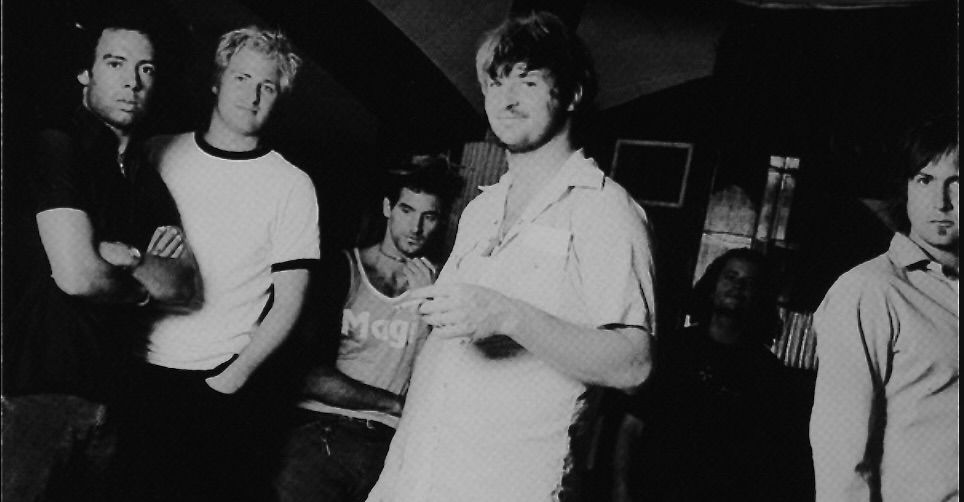
Unless you're from Metropolitan New York, you probably haven't heard of the Bogmen. The band was a phenom in The City in the nineties, but their albums got caught in the meat grinder of label uncertainty about what to do with music that didn't fit neatly into any category. Tour with Kiss? Not a great idea. Tour with the Bare Naked Ladies, or Rusted Root? Neither was a good match. As with any band who were defining their own category (Wilco, for example), the trick to survival, and success, was to persevere until your time comes, until the world catches up to you.
Unfortunately, after two great albums, the band broke apart in 1999.

The good news is that they've reunited and play a handful of New York shows every year. But all those years of languishing prevented them from finding the wide audience they deserve.
If you saw them live at their zenith, you would not have forgotten it. Amazing songwriting and musicianship, incredible polyrhythms, and a lead singer who seemed to be attached by his heel to a high-voltage live wire. Fortunately, there are several full-show videos on the web from that era.
You couldn't take your eyes off of Billy Campion. The rhythms were inescapable, and the lyrics were cynical, joyous, damning and demonic. New York audiences loved them. Still do.
All the early Bogmen songs are credited to the entire band, as it should be, but it's pretty well recognized that Billy Campion, Bill Ryan and Brendan Ryan wrote most of the lyrics and melodies. They would unlikely be pigeon-holed as protest writers, but their songs have taken on abusive psychotherapists (Dr. Jerome Love Tub) and rigid educators (The Third Rail), but What's Behind Your Coat has always seemed to me to be a direct social, political and class broadside.
What's Behind Your Coat

The Bogmen's debut album, Life Begins At 40,000,000 is one of my favorite albums of all time, and one that should have made them stars.
They signed a huge contract with Arista, were awarded a sizeable recording advance, and for a band who had scrapped through day jobs while playing sold out shows in clubs all over the tri-state area, the rush of big money brought the challenges that sudden abundance can bring.
Jerry Harrison (Modern Lovers, Talking Heads) produced, and while the band was dissatisfied that he had captured the frantic energy of their live shows, the album framed what was best about a hardworking live band that wasn't easily categorized.
And while the first single, The Big Burn, got decent regional airplay, it was released without a video in the age of music videos. The second single, the beguiling Suddenly, had a fascinating video, but didn't get much traction.
Add a record company representative who signed them, and was then being squeezed out of the company, and you have the recipe for an album not getting the attention it deserved.
The songs are built on unusual rock arrangements, the alluring polyrhythms with middle-Eastern, Indian and African flavors (provided by the rhythm section of drummer Clive Tucker, percussionist P.J. O'Connor and bassist Mark Wilke), and Campion's manic vocals.
What's Behind Your Coat is a standout among standouts.
The song's protagonist points a direct finger at a capitalist villain whose public pronouncement are in direct opposition to his actions. The song, written in the boom years of the nineties, could be an indictment of any number of Manhattan robber barons. I've always thought the invocations in the last line of the song "Name that man," should be answered with "Donald Trump." He was always "that man," and still is.
He says that he's an honest man
Taxes not included
He's pinstriped and naturally tan
Tan from all the shine he's running under your noses
He says that he's a moral man
It's easy when you've got the money
He claims he's a law abiding man
What's so great about that when you control the law?
Let me see your hands
This particular fellar
Says he's a religious man
And he sips his wine with reverance
His faith is locked in the can
And he drinks it down until it's almost empty
There's a rumor this one's a second-class man
And pushed into the corner
It's all part of the suppression plan
This is after he ditched his wife and family
Let me see your hands
You say that you're a hard working man
And the rest of the world is lazy
You lead the world in production
All work - no play and your people are all fuckin' crazy
Tell me your a proper man
Your manners overshadow your morals
You devised the suppression plan
I think you've got your soupspoon too far up your ass!
NOTE: My interview with Billy Campion on Hoot and Holler can be found in the archive section of this website.


Comments